Overview

About The Project

Tackling primary hesitancy or disfluency is seen among not only adults but moreover among children of age group 6 to 10 years. Tackling this problem by delivering solution with the help of interaction design can help these kids gain confidence. Focusing the target user and understanding their emotional behavioral patterns, pace of learning and development and then delivering the solution to gain a chance of complete recovery was the goal of this project.

Timeline

September'17 - December'19

My Role

I worked as a UX and Visual Designer. My responsibilities included defining the problem and developing a solution, conducting user research and market research along with user interviews. The project also involved creating design and game strategy, sketching, wireframing and prototyping, designing visuals for the screens.


The Challenge & The Solution

“I don't want to go to school, my friends don't like me and never listen to me”. - Julie, India
Normal disfluency is stuttering that begins during a child's intensive language-learning years and resolves on its own sometime before puberty. It is considered a normal phase of language development. About 75 out of 100 children who stutter get better without treatment. But there are children who suffer from primary hesitancy and get bullied in their schools or classes. Tackling dysfluency by creating a game that would act as a therapist for the affected children.


What Is Flounder?


Game Based Application
Breaks or disruptions that occur in the flow of speech are labelled "disfluencies". Flounder is a game based application for kids which would result in improved speech fluency, boost their confidence and which would make them feel positive about themselves.


Daily Life Problems


Problems Faced By Kids
Stuttering can become more difficult to deal with as children grow older. They may become more self-conscious and lack confidence in speaking situations. If left untreated, stuttering has the potential to affect future decisions including job choices and social relationships.


Kids often face problems during social gatherings or in schools. They are not able to communicate and that gives a major set back.


How Does It Work?


Key Features

After meeting the kids, I found that there is repetition of sounds “ap-ap-apple” or repetitions of syllables “ca-ca-cat” or prolongation such as stretching of sounds. These games are designed in a way which would solve these basic problems and steadily improve the rate of speech and confidence.

Motivation


Various levels of games. The intensity is very low at the beginning and as it goes up the levels would be challenging.

Positive Results


Each game would give the statistical data and thus would reflect some positive changes or results.

Parent control


Parents can control the activity and keep a track of the progress in terms of speed, time and pronounciations.


User Research


I met Mr. Ajit Harisinghani who is the founder of Speech Foundation India. I had a conversation with kids and realized that they have a fear in mind and Mr. Ajit also explained how speech hesitancy affects child psychology and how it can be controlled. I also did some therapeutic exercises with his students at the speech foundation to understand human behavioral patterns.

User Research

Visited The Speech Foundation in Pune and met Dr. Mugdha Kale. Dr. Kale is a school psychologist and Ajit Harisinghani is the director of the speech foundation. He gave detailed insights about how children respond in various situations while interacting with different people. Corroborated these insights by personally meeting the children and personally participating in the games they play as a therapy to understand their behavioural pattern which gave a better understanding about the children's and their families' problems.

Market Research

Market research included conducting surveys in schools and other public places like clinics, interviewing affected kids and their parents. Identified existing apps and products that monitor this disease. However, further research concluded that after a certain point of time people have started losing interest in the apps because of their monotonous nature and thus have started prefering therapists for improving the speech rate of their kids. As their parents feel that they would be guided by the therapists with personal attention.

Research Findings

Understanding the emotional behavioral pattern of children aging 6 to 10 years, it was found that they have a good pace of learning and hence theraphy at an early age gives a young child the best chance of recovery. Therapeutic games and exercises of pronunciation, breathing techniques and talking speed can help them augment self-confidence.

Research Findings


One of the effective ways of reducing stammering in children is the use of exercises. The exercises work by providing strength to speech organs like the lungs, tongue, trachea, lips and the jaw. These exercises either cure stammering completely or lower the intensity considerably.

Loud Vowel Pronouncement

Clearly and audibly the child should be asked to pronounce each of the vowels beginning from A through to E, I, O and U. The child should be very articulate while pronouncing the vowels. He/she can also distort the face while uttering the vowel sounds. Slow and concentrated reading reduces the anxiety of pronouncing the next word and works as an effective speech therapy exercise. Reading aloud has proven to be a highly efficient exercise to cure stammering and stuttering.

Pausing Technique

Children who stammer should also be taught how to pause. The idea is to teach a child to pause while uttering a sentence by pausing after the first word within the sentence followed by pauses after 2-3 words. This exercise, taught at least once a day requires that children are taught how to pause always after a few words in contrast with pausing at the centre of a given word. In the process, a child learns how to decrease stuttering, relax and remain comfortable.

Jaw Technique

Ask the child to open the jaw wide, as much as possible without exerting themselves too hard. Ask him/her to hold that position and lift the tongue towards the roof of the mouth using the tongues tip. The child should continue touching the roof of the mouth using the tip of the tongue and move the tip towards the back of the mouth. After the tongue has been stretched to the maximum without any pain, ask the child to hold the position for 4 seconds. Four to five reps of the exercise helps.

Drink Through a Straw Technique

Drinking through a straw is one of the oral exercises that help to deal with stammering. This is because drinking this way demands that the tongue remain in a strategic position that is highly important for speech. Snip off the end of a straw to decrease the size slowly after every couple of days. If your child has a stammering problem or speech challenges, pacifiers should never be used. As the child continues drinking from a straw, stammering should decrease as well.

Breathing Tactically

You can also encourage the child to stop breathing from his/her chest but from the belly. As the child breathes from his belly, muscle and nervous tensions are calmed down, relaxing the entire body.

Design Solution


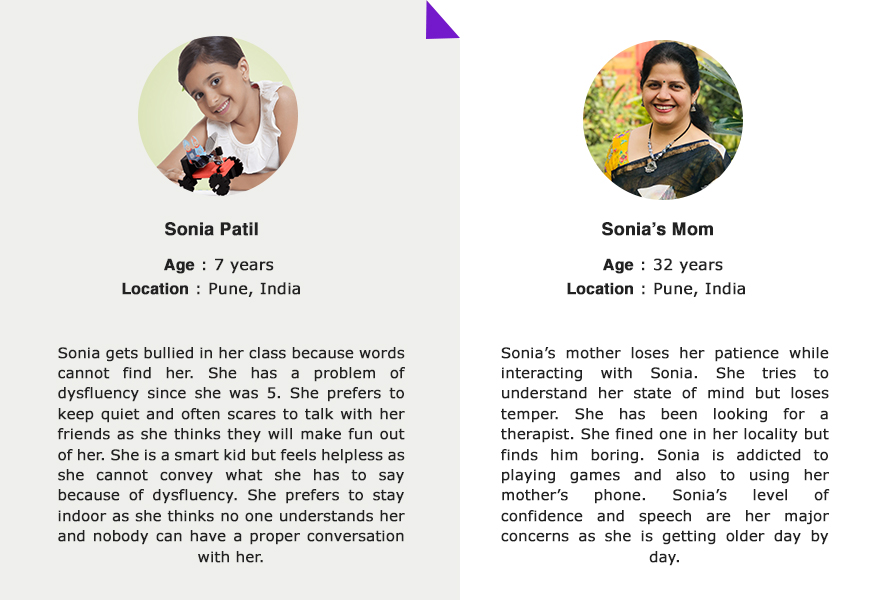
After analysing the research, I was able to meet the kids at the Speech Foundation India and also Interact with their parents. The interviews really helped me in defining design solution and thus test the games with the kids and also with their parents.

Speech


Parents and kids are shy and do not want to express how they actually feel. Thus creating a solution for parents where they can chat with the therapists.

Voice


Help kids with different voice therapies and their fluencies. Repeating basic sounds for the vocal chord to open up and get some warm ups.

Games


Some kids are very hard to tackle thus their parents have to look for new games to keep them buys. Thus a game on their ipads would be ideal for parents as well.

Reading


A way of practicing the speech therapy is reading or reciting. Creating new rhymes and repeating simple words such as cat, bat, would help kids.


Understanding the User & Its Problems


Solution & Concept

Game based Application which is focused specifically on dysfluency. Dysfluency is a real problem with a feasible solution. With daily use, this App will help any child to build and improve their rate of speech steadily and finally enhance their confidence! Their parents can also monitor their development as the App also analyses the growth or the rate of speech of child after every game.


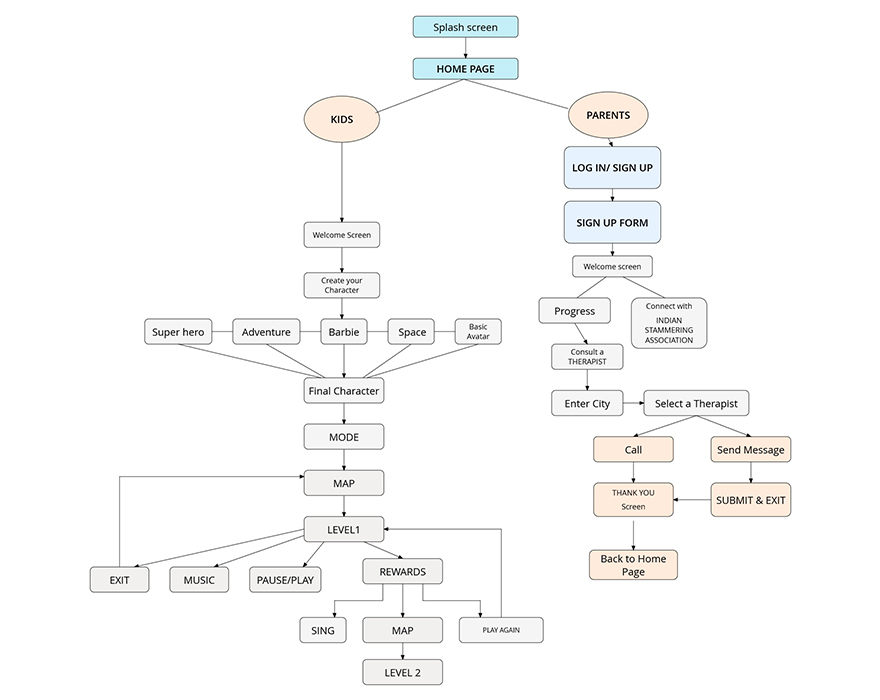
User flows


Sketches


UI Elements

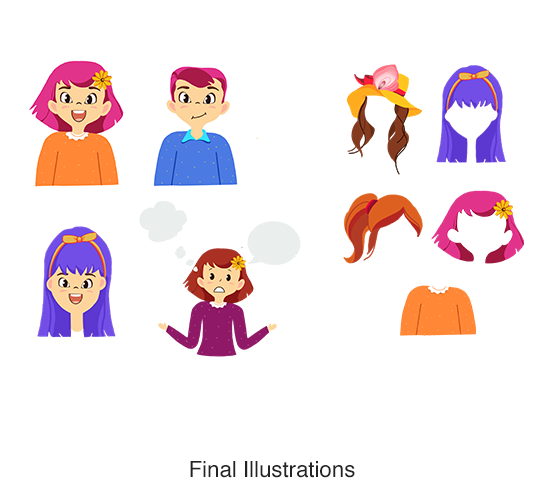
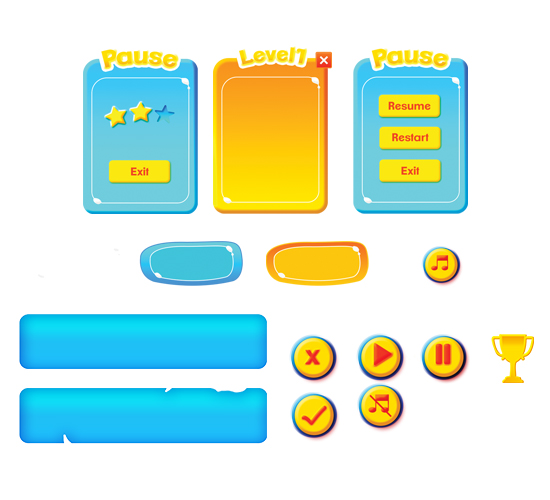
After defining the look and feel I designed some icons and UI elements that will be used in the application.


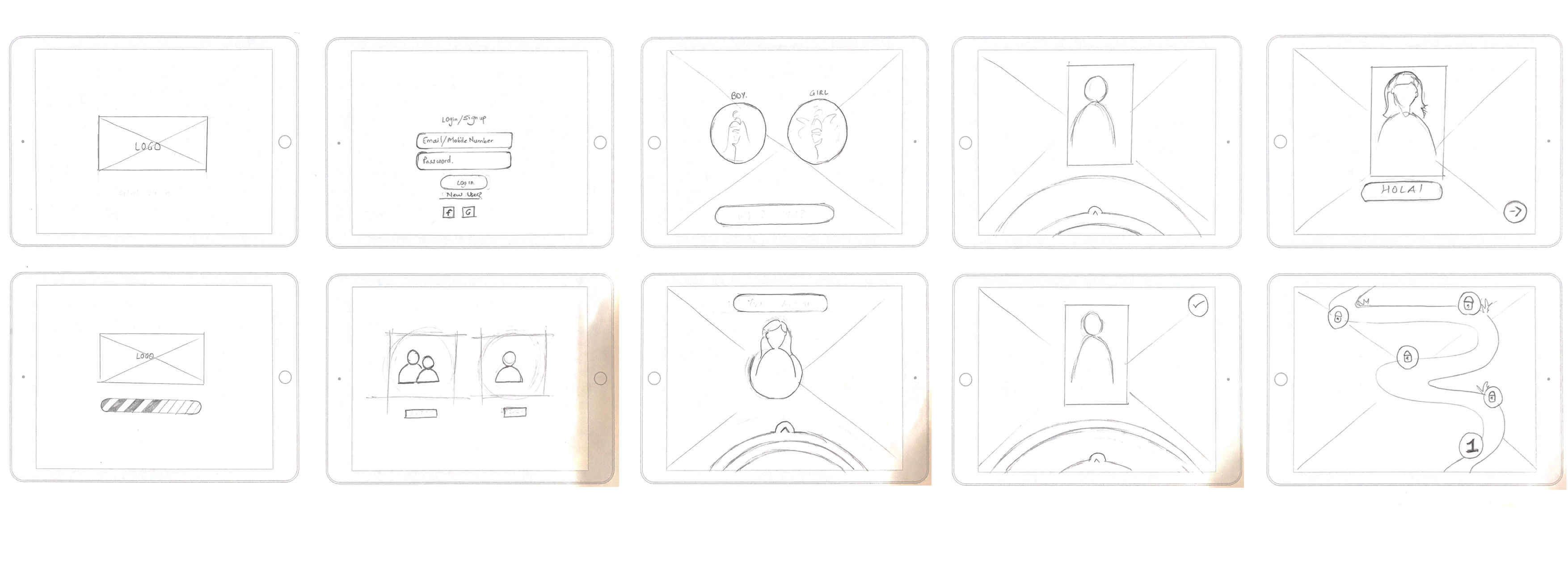
Hand Sketches


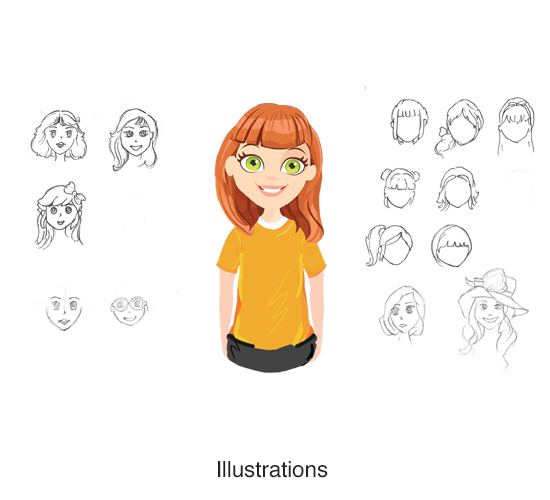
After defining the color identity, game elements I started sketching the game ideas! This was super interesting part of this journey because designing a game for kids is very challenging!

Testing The Game!


I converted my sketches to high fidelity and met couple of kids and their moms in order to carry out evaluations and informal walkthroughs. I conducted walkthroughs with the prototypes. I explained how this games work. I carried out this walkthrough by giving them my ipad and allowing user to interact and give their feedback. All the walkthroughs were helpful as they gave some valuable feedbacks and scope for exploring in terms of user experience.
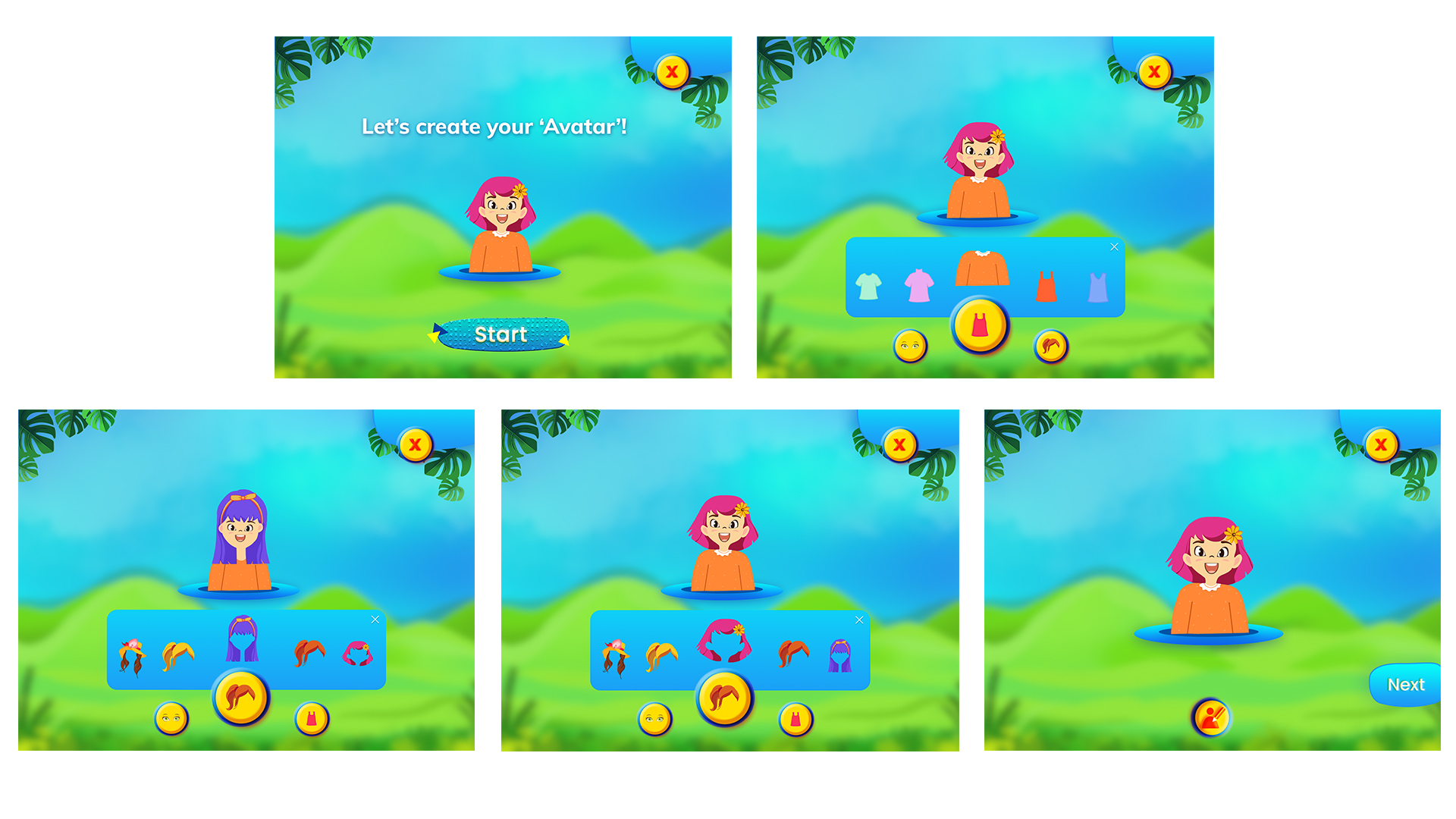
I tested the user flow where the kid starts creating his/her new avatar and then interacts with the screens and finishes first level of this game.

Testing Results & Iterations


I tested the user flow where the kid starts creating his/her new avatar and then interacts with the screens and finishes first level of this game. I found that kids spent most of the time during the initial stages of creating their avtars. They got confused about the elements and asked questions such as "Should I drag the arrow? or should I just tap it? How can I change and make it look like how it looked earlier? "


This was design 1

This iteration was done after testing.

I changed the option tab and made icons for changing the hair color and their dress so it would be clear that they tap on it instead of draging it.


High Fidelity Design

Flounder iPad App (Kids Login)

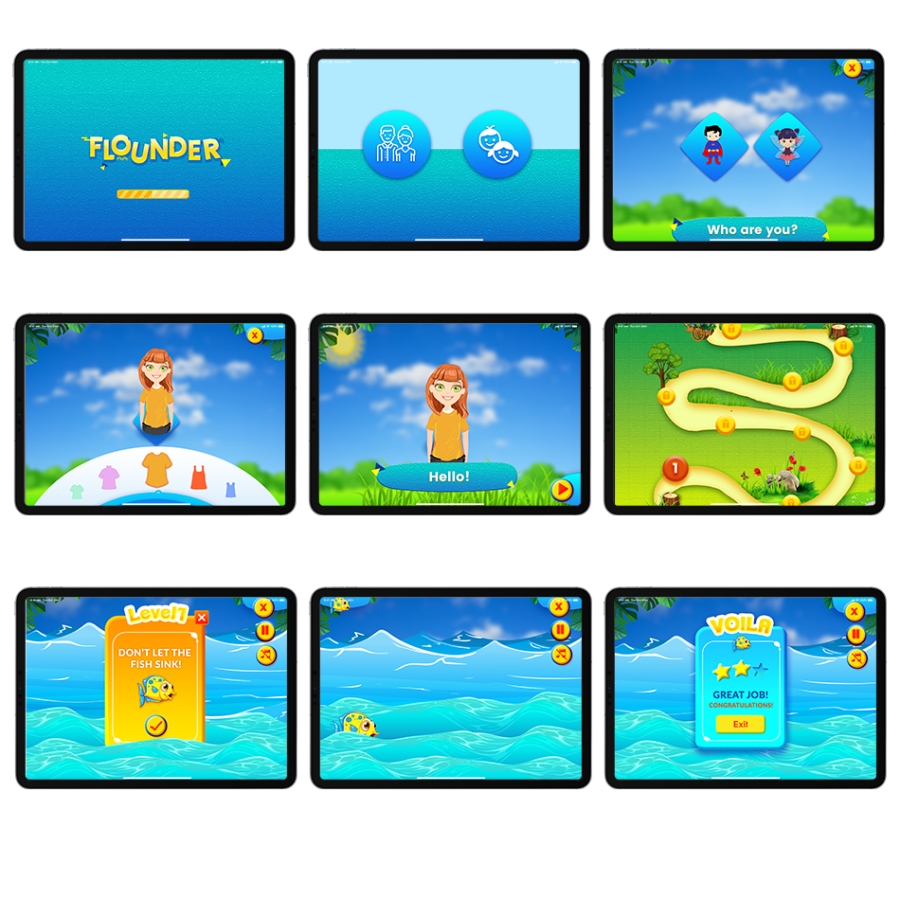
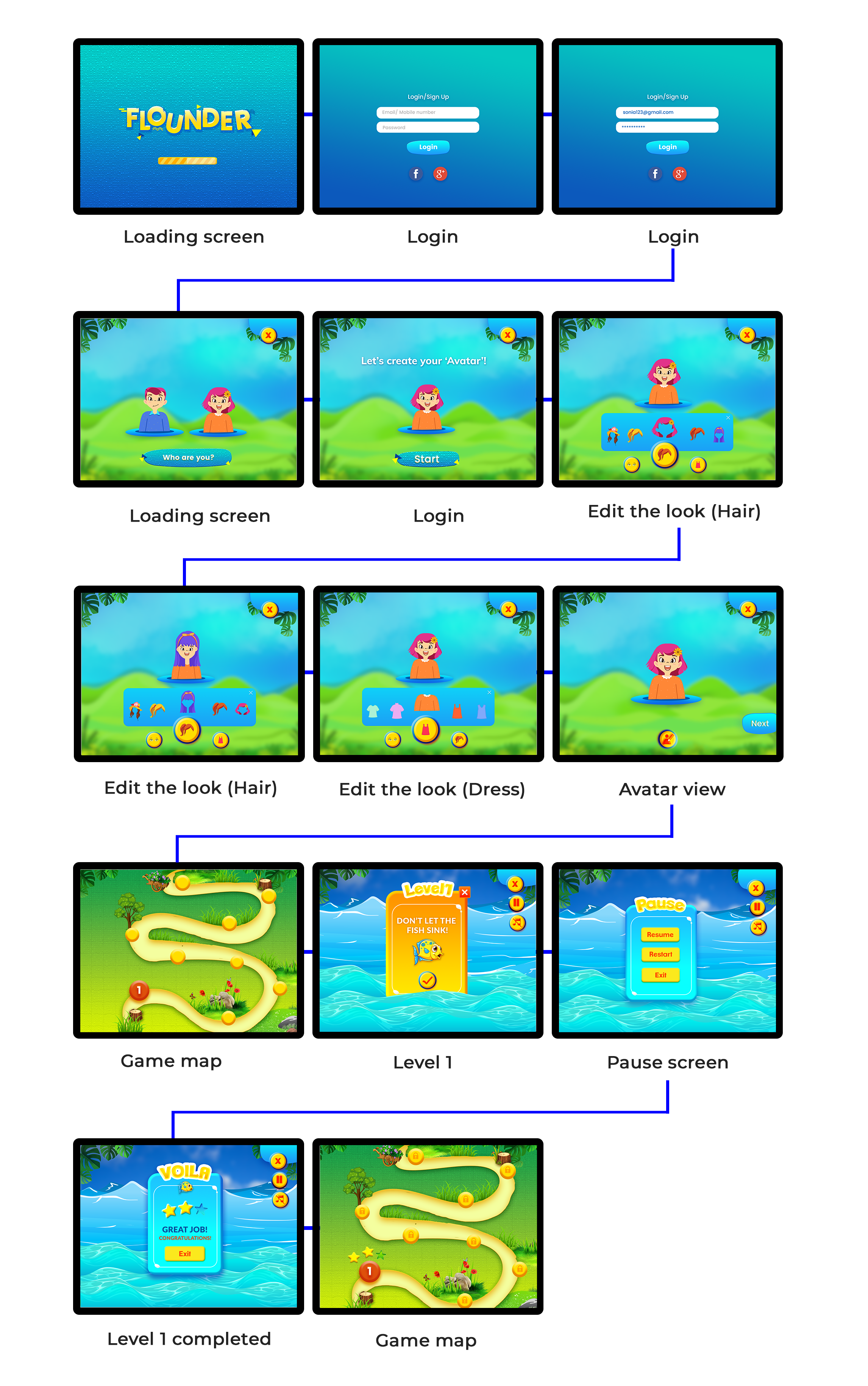
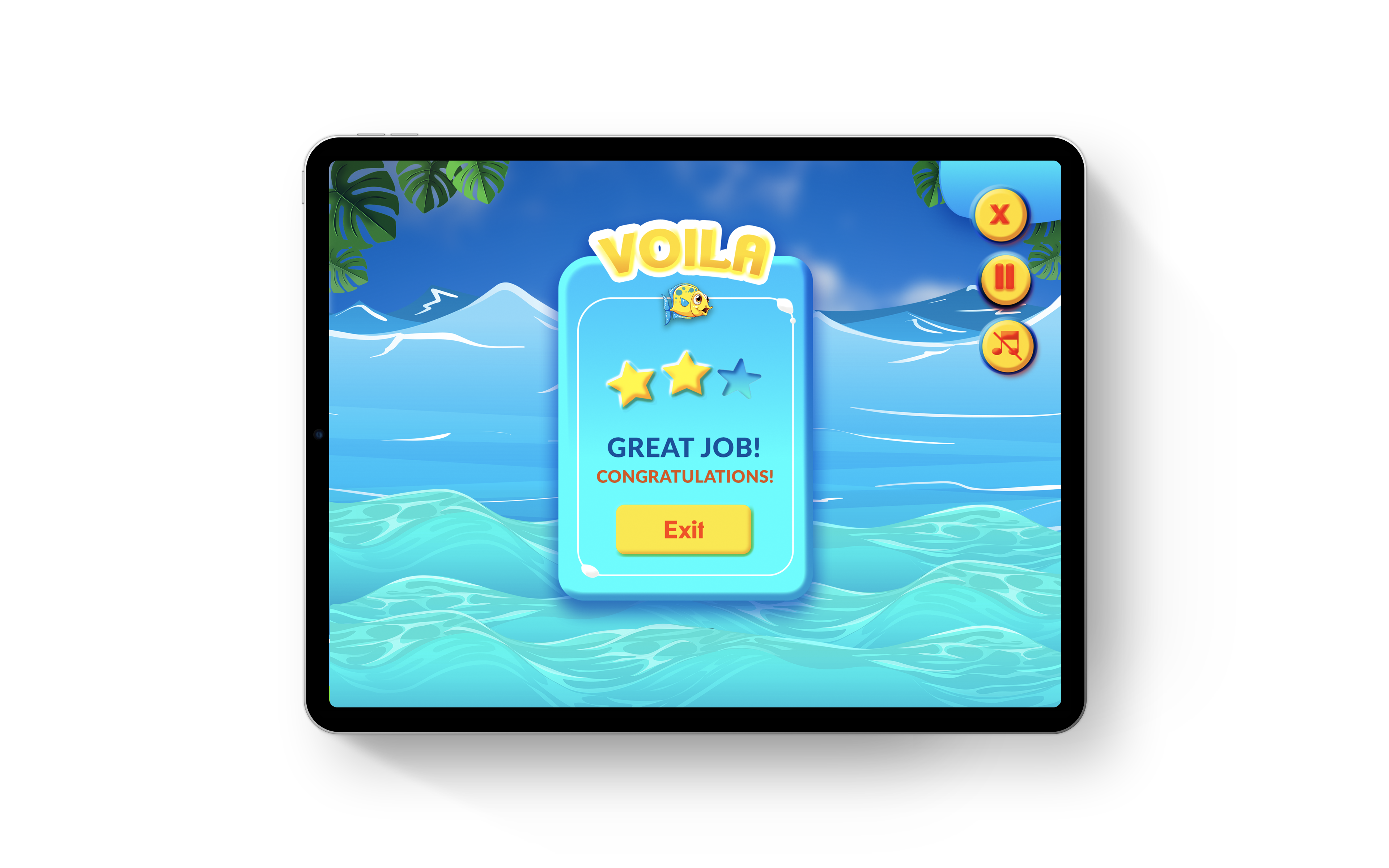
Below is the task flow where kid starts playing level 1 of the game and earns stars based on his performance.


Prototype

High Fidelity Design


High Fidelity Design (Parent login)

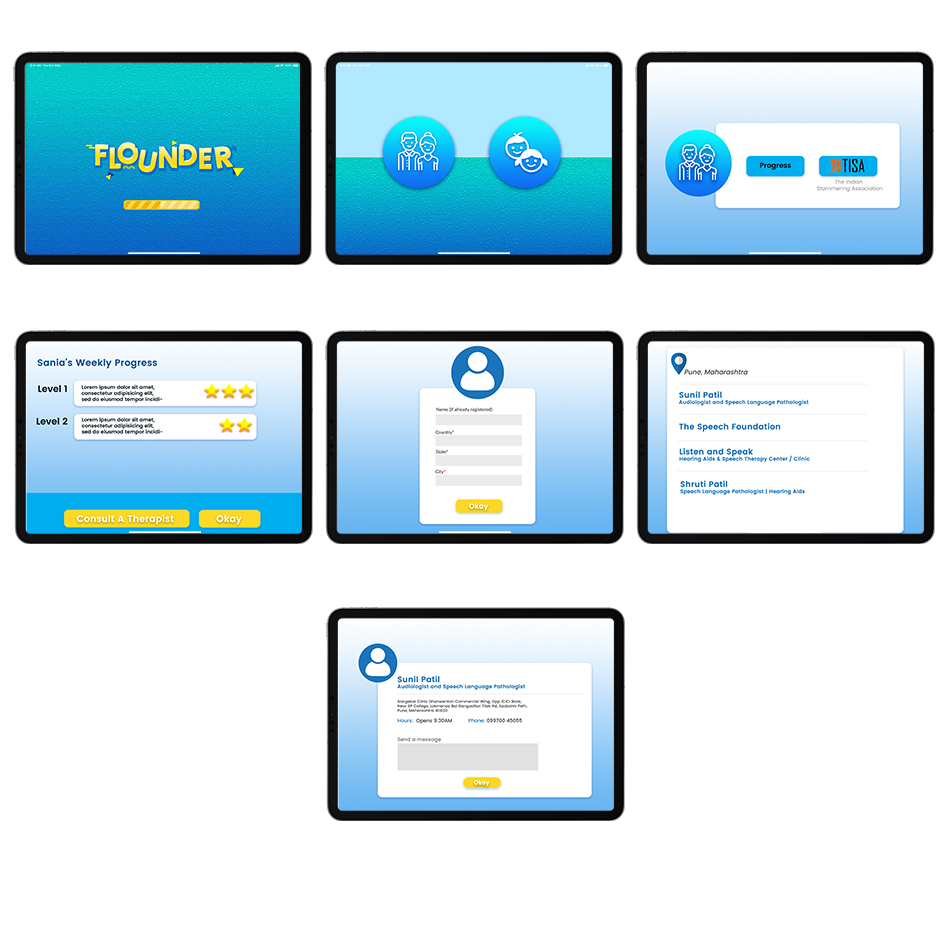
Below is the task flow where parents can track the performance and also search for doctors or therapists according to her address.

Game Example


Conclusions

This game based Application which is focused specifically on disfluency will definitely help children with various aspects such as boosting confidence and speech development. Disfluency is a real problem with a feasible solution. With daily use this App will help any child to build and improve their rate of speech steadily and finally enhance their confidence! Their parents can also monitor their development as the App also analyses the growth or the rate of speech of child after every game.